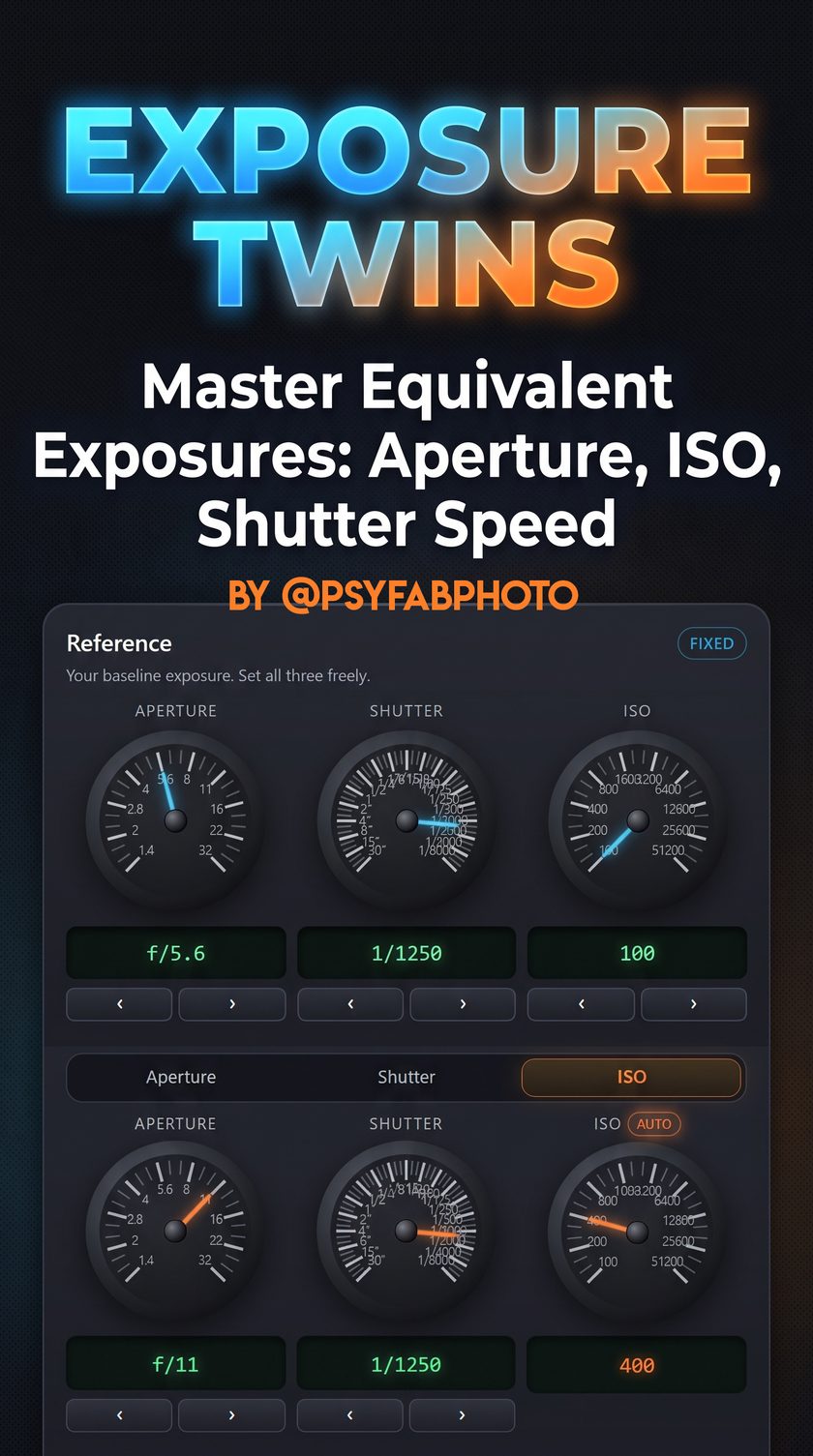
Dial in a reference exposure, then explore an equivalent setup. Pick which dial "follows" — turn the other two and watch it recompute live to keep the same overall exposure.
Your baseline exposure. Set all three freely.
Choose which setting should auto-follow, then adjust the other two.
How each setup is dialed in, at a glance — further out on an axis means a higher setting on that dial.
A quick, visual guide to the three controls that set how bright your photo is — and how they trade off.
Each stop doubles the light. Small steps, big cumulative effect.
Bigger f-number = smaller opening = less light (and more in focus).
Slow = more light but motion blurs; fast = less light but motion freezes.
Higher ISO brightens the image but adds grain/noise.
An ND filter cuts light by a set number of stops — "sunglasses" for the lens.
The same ± scale you'll see on a real camera's exposure-compensation dial or display.
Scan to open on your phone
Tailor the Challenge to your actual equipment — puzzles stay within these limits.